Looking for an authentic food tour in Paris?
Let’s start with something slightly uncomfortable.
The French don’t really go on food tours.
Not like tourists do.
They don’t usually spend €90 to shuffle around Paris eating polite triangles of cheese while someone explains that baguettes are, in fact, bread. They don’t need a stranger with a laminated route to tell them where lunch lives.
Why would they?
Their entire life is already a food tour.
They know where to buy bread. They know which butcher still gives a damn. They know which market stall has the good tomatoes, which wine shop won’t humiliate them, and which bistro is quietly doing beautiful things with leeks, liver, lentils, butter, and bones.
And when French people do want a deeper food experience?
They usually go straight to an expert.
A chef. A sommelier. A cheesemonger. A baker. Someone who actually works inside the world they’re talking about.
Or they get it as a gift — something thoughtful, personal, a little indulgent. Not a conveyor belt of “local bites” dressed up in beige marketing copy.
So if you’re visiting Paris and searching for an authentic Paris food tour, here’s the first thing to understand:
You’re not trying to find the tour Parisians take.
You’re trying to find the kind of experience that gives you access to the food culture they already live inside.
That’s a very different thing.
And it matters.
Because Paris is full of food tours. Some are excellent. Some are fine. Some are over-scripted, over-priced, and about as authentic as a plastic beret full of supermarket macarons.
If you’ve been comparing popular Paris food tours online, you’ve probably noticed they all promise the same thing: authentic local food, hidden gems, expert guides, unforgettable bites. Très bien. But “authentic” is doing a lot of heavy lifting there.
This guide is here to help you tell the difference.
No fluff. No glossy nonsense. Just the chef’s-eye version of how to choose a Paris food tour that actually tastes of Paris.
Still deciding if paying for a tour makes sense? Start here: Is a Paris Food Tour Worth It?
Written by Chef Tris, a professional chef based in Paris and the founding food tour guide behind Eat Like The French. This guide is written from the point of view of someone who actually cooks, eats, shops, reviews, and leads food tours in Paris — not someone regurgitating the same tired cheese facts from a clipboard.
What Is an Authentic Paris Food Tour?
An authentic Paris food tour is a small-group, expert-led food experience that connects you to real local food culture — not just tourist-friendly highlights. The best ones focus on independent food shops, seasonal ingredients, neighbourhood context, and guidance from someone with genuine culinary expertise, such as a chef, sommelier, baker, cheesemonger, or specialist local guide.
In plain English: an authentic food tour in Paris should help you understand how the city eats, not just feed you a few photogenic snacks and send you back to your hotel bloated but none the wiser.
Table of Contents
What Makes a Paris Food Tour Authentic?
Everyone says authentic.
Authentic bistro. Authentic bakery. Authentic Parisian experience. Authentic local food tour.
Lovely.
But in Paris, authentic does not automatically mean old, rustic, famous, traditional, or covered in checked tablecloths.
Authentic means it belongs to the real rhythm of the city.
It is part of how people actually eat here.
That could mean:
- a neighbourhood bakery that sells out of its best pastries by late morning
- a tiny wine bar where the owner talks about soil like it’s a family member
- a market stall where the produce changes with the weather, not the algorithm
- a butcher who knows the farms, the cuts, and the customers
- a café that is not beautiful on Instagram but is perfect at 8:12 on a wet Tuesday morning
It might be in Le Marais, Saint-Germain-des-Prés, Canal Saint-Martin, Belleville, Montmartre, or a quieter pocket of the city most visitors barely notice. The neighbourhood matters less than the logic behind the stops: are they chosen because they reveal how Paris eats, or because they are easy to package?
Authenticity in Paris isn’t curated for tourists. It exists whether you’re there or not.
Authenticity in Paris is not always photogenic.
Sometimes it is loud, cramped, impatient, seasonal, awkward, buttery, brilliant, and slightly rude around the edges.
That’s the good stuff.
The problem is that tourist-facing food experiences often sand those edges down. They make everything smoother, safer, easier, sweeter.
And yes, comfort matters. You are on holiday, not staging.
But if everything feels too polished, too scripted, too perfectly “Parisian”, there is a decent chance you’re not tasting Paris. You’re tasting the version of Paris built for people who are scared of ordering cheese.
Before you book anything, sharpen your instincts with my guide to how to avoid tourist-trap food in Paris. It will save you from laminated menus, dead-eyed croques, and the kind of “authentic” restaurant that exists mainly to punish the hungry and jet-lagged.
What Tourists Are Really Buying on a Paris Food Tour
Most people think they are buying food.
They are not.
Not really.
You can buy food yourself. Paris is not exactly hiding the bread.
What you are really buying is access, translation, confidence, curation, and context.
You are paying someone to help you understand why one bakery matters more than another. Why a cheese tastes different in spring. Why a market stall has a queue. Why a dish that looks simple might be technically brilliant. Why the place with the ugly sign and the terrifying lighting might be better than the restaurant with 4,000 glowing reviews and a queue of TikTok pilgrims outside.
A good Paris food tour should help you eat better for the rest of your trip.
That is the point.
Not just “here are five nice things.”
Nice is not enough.
Nice is for hotel lobby croissants and polite conference buffets.
Paris should give you opinions.
It should sharpen your instincts.
A proper food tour should leave you thinking:
“Oh. I understand this city differently now.”
If it doesn’t do that, you may have just paid for an expensive snack crawl.
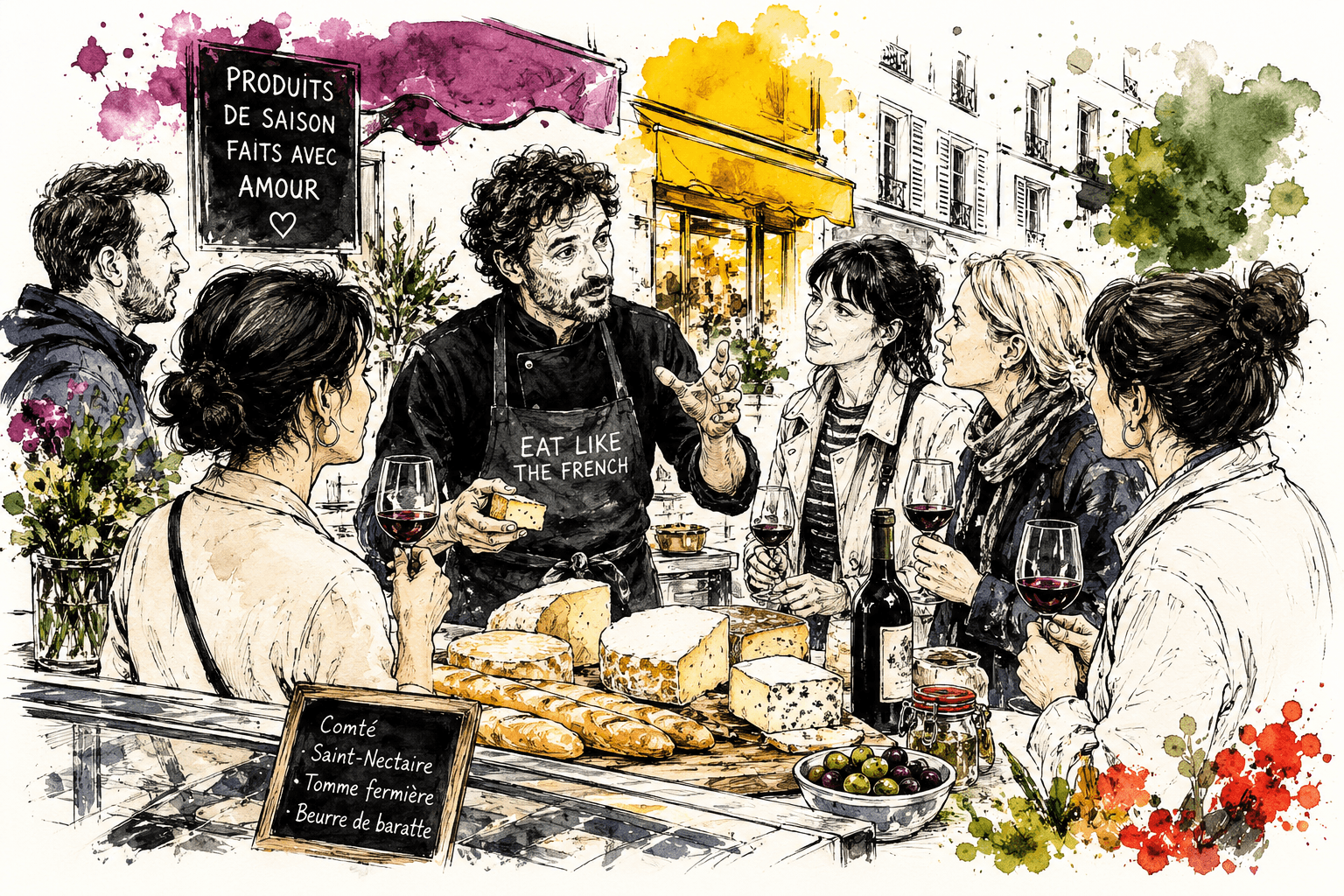
| Generic Paris Food Tour | Authentic Paris Food Experience |
|---|---|
| Big group | Small group |
| Fixed script | Expert-led conversation |
| Famous stops | Carefully chosen stops |
| Quantity-led | Quality-led |
| Tourist performance | Real food culture |
| Nice afternoon | Better eating for the whole trip |
The point isn’t to eat more. The point is to eat smarter for the rest of your trip. That’s what a good food tour should actually do.
Why Most Paris Food Tours Miss the Point
Here’s the harsh bit.
A lot of Paris food tours are not built for food lovers.
They are built for volume.
Big groups. Fixed routes. Safe stops. Predictable portions. Guides following a script. The same stories, same jokes, same photos, same “hidden gems” visited by three tour groups before lunch.
That does not automatically make them bad.
There is a place for easy, cheerful, tourist-friendly tours. Some people want exactly that. They want a gentle stroll, a few bites, a nice guide, and a low-risk afternoon.
Fine.
But let’s not pretend that is the same thing as an authentic food experience.
Real food culture is not always repeatable.
It changes with the season, the day, the supplier, the chef’s mood, the weather, the market, and whether the baker’s oven behaved itself that morning.
You cannot fully standardise that.
You can’t script seasonality.
You can’t script seasonality. You can’t fake sourcing. You can’t template flavour.
And you definitely can’t build a real food experience if nobody leading it actually understands food beyond the brochure notes.
That is where things start to go wrong.
Because when a guide cannot explain why something matters, they often fall back on facts.
Dates. Legends. Cute stories. “The French love cheese.” “This pastry was invented in…” “This street is very old.”
Useful? Sometimes.
Delicious? Not necessarily.
A real food tour should go deeper than that.
It should answer the questions food people actually care about.
Why this producer? Why this cheese now? Why this wine with this? Why does this baguette have flavour while the one near your hotel tastes like architectural insulation? Why is this place loved by locals and that famous one not worth the queue?
That is the difference between guiding and reciting.
How to Choose an Authentic Paris Food Tour
Before we get into the checklist, here is the fastest way to filter the nonsense.
The Brutally Simple Test: Would a Local Ever Do This?
This is the killer filter.
When looking at a Paris food tour, ask yourself:
Would a local ever do this?
Not every week. Not casually. Not because they need help finding lunch.
But would a curious Parisian, a food-loving friend, a chef, a visiting relative, or someone buying a thoughtful gift recognise value in the experience?
If the answer is absolutely not, be careful.
Because if a tour is built only for people who know nothing about Paris, it may spend most of its time explaining the obvious.
Yes, baguettes are important.
Yes, cheese is a thing.
Yes, wine exists.
Merveilleux. Shall we move on?
A better tour should make you feel like you have been let into a more intelligent conversation. It should not patronise you. It should not treat French food as a museum exhibit. It should show you how people actually eat, shop, choose, argue, taste, and obsess.
That is where the pleasure lives.
Paris Food Tours
Eat Paris beyond the landmarks
Skip the tourist-trap theatre. Taste the markets, bakeries, bistros—no fluff. Just the food that actually matters.
Book a Paris Food Tour →What to Look for in the Best Authentic Paris Food Tours
The best authentic Paris food tours usually have a few things in common. They are not always the cheapest, the loudest, or the most heavily advertised. They are the ones where the choices feel deliberate.
Look for:
- a chef-led, sommelier-led, producer-led, or properly expert-led experience
- small groups rather than pavement-blocking herds
- independent shops, markets, wine bars, bakeries, cheesemongers, or restaurants with a real point of view
- seasonal flexibility instead of a dead little script that never changes
- clear food knowledge, not just cute stories about Paris
- enough context to help you eat better after the tour ends
That is the difference between a decent afternoon and a food experience that rewires the rest of your trip.
1. Look at Who Is Leading the Tour
Start here.
Not with the photos. Not with the five-star reviews. Not with the promise of “secret spots.”
Who is actually leading the tour?
A chef-led Paris food tour is not automatically better, but it tells you something important: the person guiding you has probably spent years thinking about ingredients, sourcing, cooking, seasonality, service, suppliers, and flavour.
That matters.
A sommelier-led wine tour? Great.
A cheesemonger-led cheese tasting? Excellent.
A baker explaining bread? Yes, please.
A generic guide confidently reading a cheese fact from memory while holding a clipboard?
Maybe less thrilling.
Look for evidence of real expertise:
- Do they work in food?
- Have they cooked, served, sourced, written, reviewed, judged, taught, or hosted professionally?
- Do they have a clear point of view?
- Can you feel a human being behind the tour, or just a booking engine?
Food is not just information.
It is judgement.
You want someone with taste.
2. Check the Group Size
Group size tells you almost everything.
A small group can move differently. It can pause, adapt, ask questions, tuck into smaller places, and have actual conversations.
A large group has to be managed.
That changes the whole experience.
As a rough guide:
- 2–6 people: intimate, flexible, high-touch
- 6–8 people: still personal, usually workable
- 10–12 people: can be good, but depends heavily on the guide
- 15+ people: you may be in cattle territory
That sounds harsh.
Good.
Because food is intimate. It is hard to talk about a perfect piece of cheese with 17 people blocking a pavement while someone at the back asks if there is a bathroom nearby.
Large groups can work for history walks.
For food? They often flatten the magic.
If you want authentic, look for small.
3. Look at the Stops, Not the Marketing
If you are trying to choose between several food tours in Paris, this is where the glossy promises start to fall apart.
Every authentic Paris food tour says it visits local gems.
Ignore that for a minute.
Look at the actual stops.
Are they named? Are they real independent businesses? Are they places with a point of view? Or are they vague categories dressed up as romance?
“An award-winning bakery.”
Which one?
“A traditional cheese shop.”
Run by whom?
“A local market.”
Which stalls? Why that market? Why that producer?
You do not need every detail spoiled before booking. A little mystery is part of the fun.
But the tour should give you enough to trust that the stops are chosen with care, not convenience.
Be suspicious of tours that lean too heavily on famous names, viral shops, or places that already appear in every generic “best food in Paris” list.
Famous is not the same as good.
Busy is not the same as beloved.
A queue is not a personality.
The best Paris food experiences often happen in places that do not need to shout.
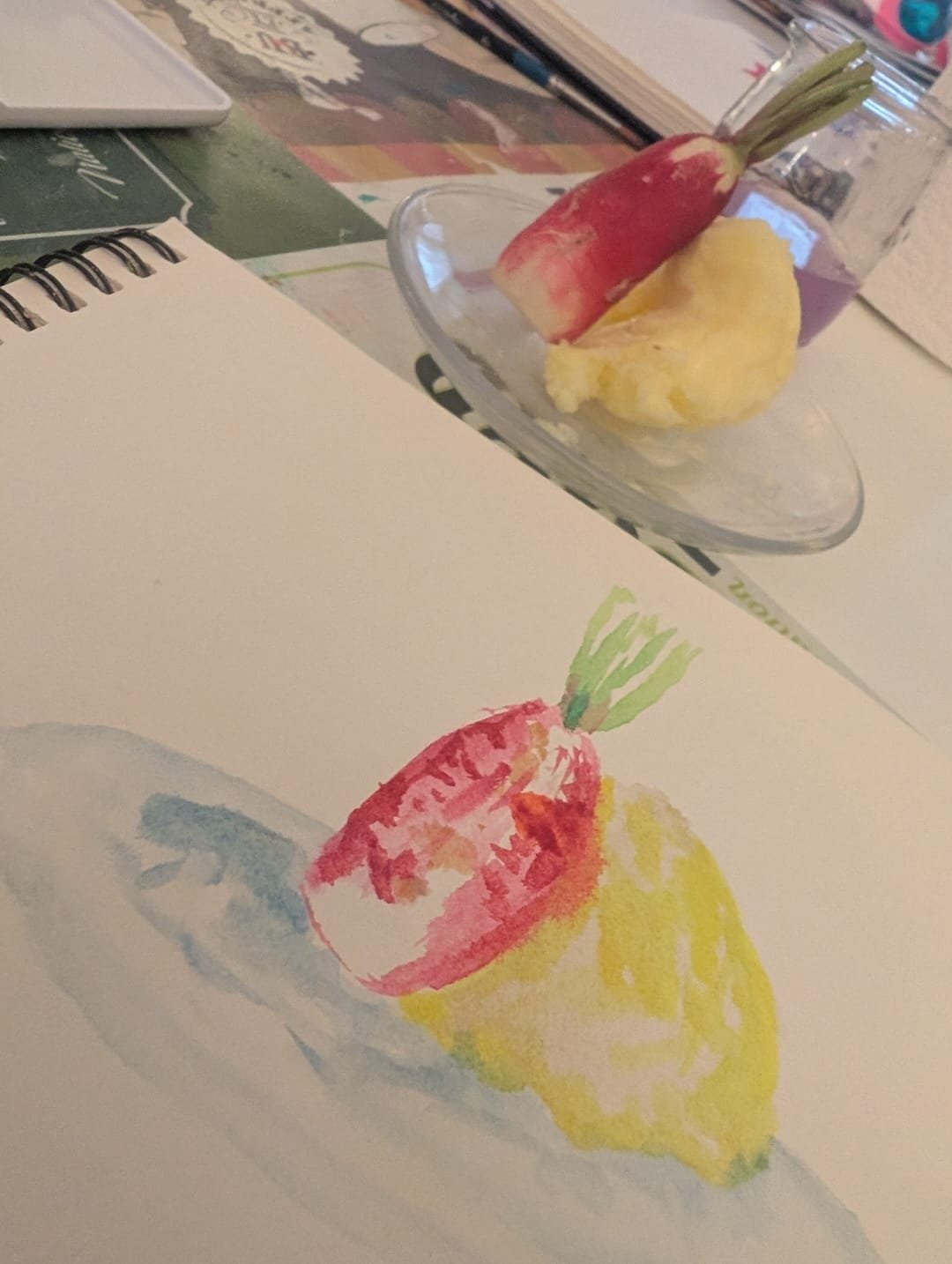
4. Ask Whether the Tour Changes With the Season
[IMAGE SLOT — SEASONAL MARKET DETAIL]
File name: seasonal-paris-food-tour-market-produce.png
Alt text: Seasonal French market produce showing why authentic Paris food tours should change with the season.
Caption: Real food changes with the season. Your tour should too.
This is one of the easiest ways to spot a real food experience.
Does the tour adapt?
Because French food is deeply seasonal.
Spring tastes different from autumn. Summer markets do not behave like winter markets. Cheese changes. Fruit changes. Restaurant menus shift. Wine choices move. Even the rhythm of the city changes.
A food tour in Paris that promises the exact same experience every day of the year is not necessarily fake, but it is probably limited.
Look for language like:
- seasonal tastings
- market-led route
- changing stops
- chef’s selection
- based on availability
- adapted to the day
That is usually a good sign.
It means someone is paying attention.
Real food requires attention.
Want the chef-led version? Eat Like The French tours are built around real food culture, seasonal details, and the kind of blunt guidance you normally only get from a chef friend in Paris.
Taste it for yourself.
5. Beware of “Too Much Food” as the Main Selling Point
This may sound strange coming from a chef, but more food is not always better.
Some tours sell themselves like a competitive eating challenge.
“Come hungry!”
“Enough food for lunch and dinner!”
“Ten tastings!”
Fine, but what are they?
A good food tour is not about being stuffed into submission.
It is about tasting with purpose.
You want generosity, yes. Nobody wants to pay serious money and leave nibbling emergency crisps from a Monoprix bag.
But quality matters more than quantity.
A perfect bite of cheese explained properly can teach you more than five forgettable pastries served in a rush.
Authenticity is not measured in calories.
Paris Food Tours
Eat Paris beyond the landmarks
Skip the tourist-trap theatre. Taste the markets, bakeries, bistros—no fluff. Just the food that actually matters.
Book a Paris Food Tour →6. Read Reviews Like a Cynical Chef
How do you know if a food tour is legit in Paris?
A legitimate Paris food tour should have reviews that mention specific food knowledge, memorable stops, useful recommendations, and a guide who clearly understands the city beyond surface-level tourist facts. If the reviews only say “fun,” “nice,” and “lots of food,” that may be pleasant — but it does not prove authenticity.
Reviews are useful, but you need to read between the lines.
Do not just look at the stars.
Look for what people actually praise.
Good signs:
- “We learned how to choose better restaurants afterwards.”
- “The guide changed the route based on the day.”
- “It felt personal.”
- “We met real shopkeepers / producers / locals.”
- “The guide clearly knew food.”
- “This was the best thing we did in Paris.”
Less useful signs:
- “Lots of food.”
- “Nice guide.”
- “Good value.”
- “Fun facts.”
Those are not bad. They just do not prove depth.
Also watch for reviews that sound too polished. If every review says essentially the same thing, either the experience is incredibly consistent or the internet is doing what the internet does best: lying in a beige cardigan.
You want texture.
Real praise has details.
7. Avoid Tours That Treat Paris Like a Theme Park
Paris is not a culinary Disneyland.
It is a living city.
People work here. Shop here. Rush here. Eat badly here. Eat brilliantly here. Queue, complain, flirt, overpay, under-tip, argue about bread, and drink coffee that would make an Italian weep.
An authentic food tour in Paris should respect that.
It should not turn locals into props.
It should not treat artisans like photo opportunities.
It should not promise some fantasy version of “real Paris” where everything is quaint, charming, and conveniently arranged for your content schedule.
The best tours help you notice the city more clearly.
They do not dress it up in costume.
8. Be Careful With the Word “Secret”
There are almost no true secrets in Paris.
There are, however, plenty of places that are overlooked, misunderstood, under-publicised, or simply not optimised for tourists.
That is different.
A tour promising “secret Paris food spots” may still be excellent. But ask yourself: secret to whom?
Secret to locals?
Probably not.
Secret to TikTok?
Maybe.
Secret to someone staying near the Eiffel Tower who has eaten three meals on the same tourist street and now needs rescuing?
Quite possibly.
The better phrase is not “secret.”
It is “well chosen.”
That is what you are paying for.
9. Check Whether the Tour Helps You After It Ends
This is a big one.
A good Paris food tour should keep paying off.
After the tour, you should know:
- how to spot better bakeries
- what to look for at a market
- how to choose cheese with a bit more confidence
- which neighbourhoods suit your taste
- what tourist traps look like
- how locals structure meals
- where to go next
That after-effect matters.
A weak tour entertains you for three hours.
A strong tour changes how you eat for the rest of the trip.
And if you decide you’d rather wander alone, armed with better instincts and a dangerous appetite, start with my free self-guided food tours in Paris. Stroll, snack, repeat. No cattle pen required.
That is what makes it worth paying for.
So, What Does an Authentic Paris Food Tour Actually Look Like?
Are Paris food tours actually authentic?
Some are. Many are not. The authentic ones tend to be smaller, more personal, more expert-led, and more connected to real Paris food culture. The weaker ones use “authentic” as decoration — a pretty word sprinkled over a standard tourist route.
An authentic Paris food tour does not need to be rough, cheap, or aggressively local.
It can be beautiful. It can be polished. It can be luxurious. Paris does sensual indulgence very well, when it wants to.
But it should feel connected to real food culture.
It should be led by someone with expertise.
It should have opinions.
It should respect the people and places involved.
It should adapt where possible.
It should make you feel less like a consumer and more like a guest being trusted with the good stuff.
That is the difference.
Not whether you ate cheese.
Not whether someone said “bonjour.”
Not whether the photos looked nice.
But whether you left with a sharper tongue, a better nose, and a more dangerous appetite.
That is Paris doing its job.
Is an Authentic Paris Food Tour Worth It?
It can be.
But only if you choose the right one.
If you are still wondering whether a food tour makes sense for your trip, start with my full guide: Is a Paris Food Tour Worth It?
That post breaks down when a tour is genuinely valuable, when you should skip it, and what kind of traveller gets the most out of paying for one.
But if you already know you want a food tour, the question is no longer “is it worth it?”
The question is:
Who do you trust to show you the city?
Because in Paris, food is not just food.
It is status, ritual, pleasure, politics, memory, technique, and sometimes a very small argument about butter.
You want someone who understands that.
Not someone who can simply point at a croissant and smile.
A Chef-Led Paris Food Tour With No Fluff
At Eat Like The French, the goal is not to pretend that Parisians spend their weekends booking food tours.
They don’t.
The goal is to give you the kind of authentic food tour experience you would normally only get if you had a chef friend in Paris willing to drag you around, feed you properly, tell you what is worth your money, and occasionally be brutally honest about what is not.
That means real places, real context, and no glossy nonsense.
If you want a Paris food tour that feels less like being processed and more like being let in, come taste it for yourself.
Join a Chef-Led Paris Food Tour
No fluff. No tourist theatre. Just real French food, properly explained.
Love this? Get more real, unfiltered food stories straight to your inbox. No fluff, no spam—just damn good food writing and all for free!

From the bustling streets of Paris to the heat of a professional kitchen, my life has always revolved around food. A Brit who moved to France at 16, I trained as a chef in a Parisian palace kitchen at 18 and have spent decades cooking, eating, and living like the French.
By day, I run kitchens and events, but Eat Like The French is my side hustle—a way to share my passion for French food through writing and food tours. After a detour into tech recruitment, I returned to what I love most: cooking and storytelling—one dish, one tour, and one bite at a time.
Authentic Food Tour FAQ
Do locals go on food tours in Paris?
Not usually in the tourist sense. Most Parisians already have their own food routines, trusted shops, favourite markets, and restaurant habits. When locals do book food experiences, they are more likely to choose something expert-led, specialist, or gifted, such as a wine tasting, chef-led experience, or producer-focused visit.
What makes a Paris food tour authentic?
An authentic Paris food tour should connect you to how people actually eat in the city. That means thoughtful stops, real expertise, seasonal awareness, small groups where possible, and enough context to help you eat better after the tour ends.
How do I avoid tourist-trap food tours in Paris?
Look beyond the photos and check who leads the tour, how big the group is, whether the stops feel carefully chosen, and whether the experience adapts to the season. Be cautious of vague marketing, huge groups, and tours that focus more on quantity than quality.
Is a chef-led Paris food tour better?
A chef-led food tour can offer deeper insight because chefs understand ingredients, technique, sourcing, seasonality, and flavour. It is not the only good option, but if you care about food beyond surface-level facts, expertise matters.
How much should a good Paris food tour cost?
Prices vary depending on group size, inclusions, neighbourhood, and expertise. A cheaper tour may be fine for a casual snack walk, but a small, expert-led experience usually costs more because you are paying for curation, access, and knowledge — not just food.
What should I ask before booking a Paris food tour?
Ask who leads the tour, how many people are in the group, whether tastings are included, whether the route changes seasonally, and whether the tour is suitable for your level of food interest. The answers will tell you a lot.