
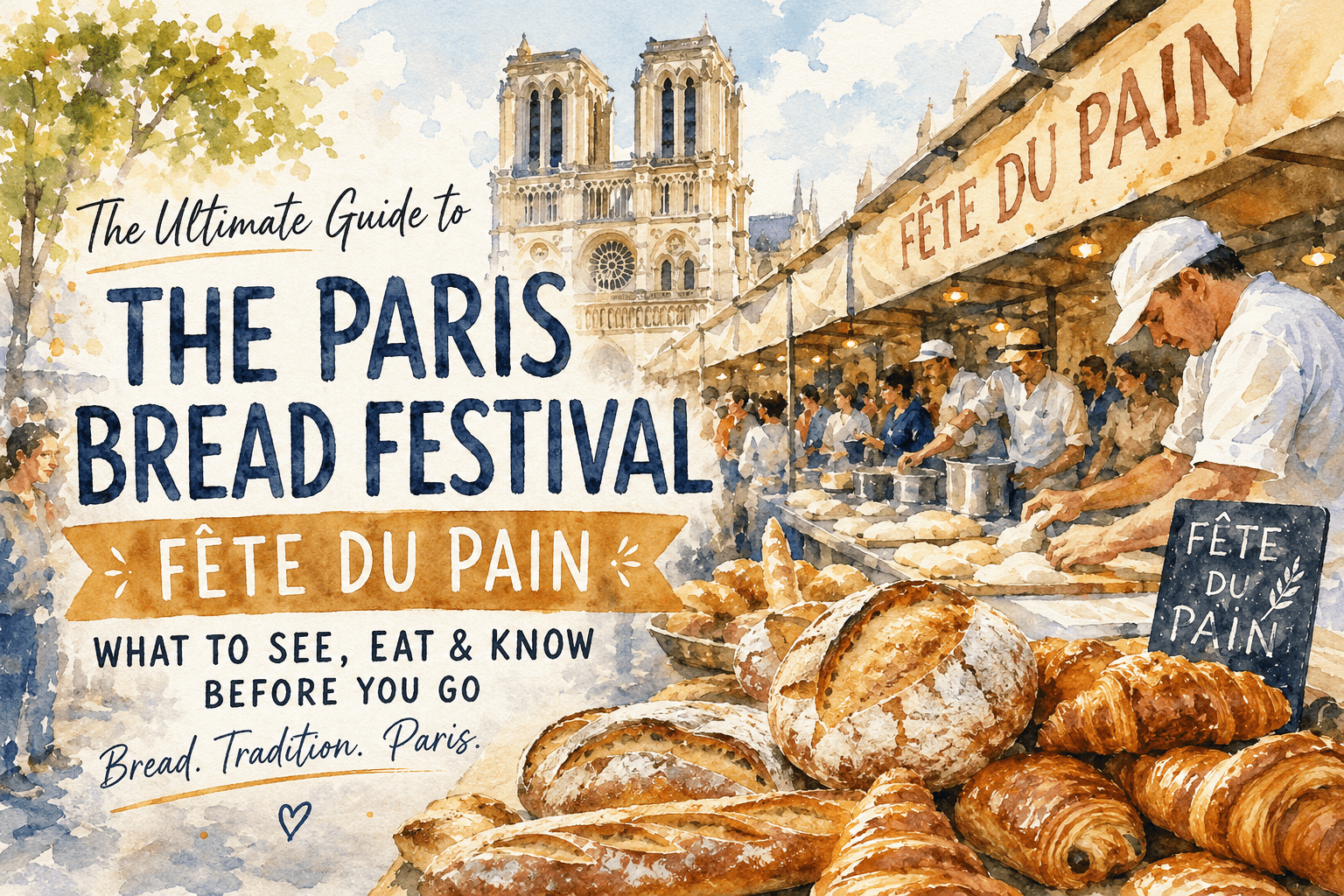
Paris doesn’t romanticise bread.
It weaponises it.
The Paris Bread Festival celebrates that tradition, the fete du pain is all about the bread and the bakers that work hard every day to make sure french bread continues to be the best in the world.
Every day across the city, millions of baguettes are carried home tucked under arms like edible batons of national pride. Grandmothers inspect crusts with terrifying seriousness. Bakers wake at impossible hours chasing the perfect crackle, the perfect fermentation, the perfect honeycombed crumb hidden beneath a deep chestnut crust.
And once a year, under the shadow of Notre-Dame, the entire thing explodes into public view.
The Paris Bread Festival — officially known as the Fête du Pain — transforms the Parvis de Notre-Dame into a giant open-air bakery.
For a few days each May, Notre-Dame smells like butter, toasted flour, and warm baguette.
Packed with flour-dusted artisans, croissant competitions, schoolchildren clutching pastries, tourists losing their minds over butter, and some of the most respected bakers in France.
But here’s the thing most tourist guides miss:
This isn’t really about bread.
It’s about bakers.
About celebrating and showcasing the people who wake up at impossible hours chasing technical perfection most people will never even notice.
Because the Paris Bread Festival is not just a tourist event. It’s a public recognition of craftsmanship.
The Syndicat des Boulangers doesn’t simply hand out awards quietly behind closed doors. Winners are celebrated publicly beneath Notre-Dame in front of fellow bakers, journalists, food obsessives, politicians, industry professionals, and the Mayor of Paris herself.
For a few days, bakers become visible.
And in a country where bread still carries cultural weight, that visibility matters.
Because in France, bread is still sacred.
I’ve attended the festival as both a visitor and as part of the judging ecosystem surrounding Paris bakery competitions through the Syndicat des Boulangers. I’ve stood backstage watching apprentices panic over croissants. I’ve watched Parisian grandmothers argue over baguette prices with the fury of revolutionaries. I’ve seen tourists realise — usually after the first bite — that French bread culture is far deeper than a cute Instagram photo of a baguette sticking out of a bicycle basket.
So this guide is not just another list of dates and opening times.
This is the chef’s-eye version.
The real version.
The buttery, chaotic, deeply French version.
Table of Contents
What Is the Paris Bread Festival?
Paris Bread Festival quick guide
Dates: Usually the first half of May, around Saint Honoré’s feast day
Location: Parvis Notre-Dame – Place Jean-Paul II, Île de la Cité
Nearest metro/RER: Cité, Saint-Michel Notre-Dame, Hôtel de Ville
Price: Free entry
Best time to visit: Morning, ideally around 10:00–11:00 before the crowds build
The Paris Bread Festival — known officially as the Fête du Pain — is one of France’s largest celebrations of bread and bakery culture.
Every year, artisan bakers from across Paris and the surrounding regions gather on the Parvis de Notre-Dame for around ten days of demonstrations, tastings, competitions, educational workshops, and public baking.
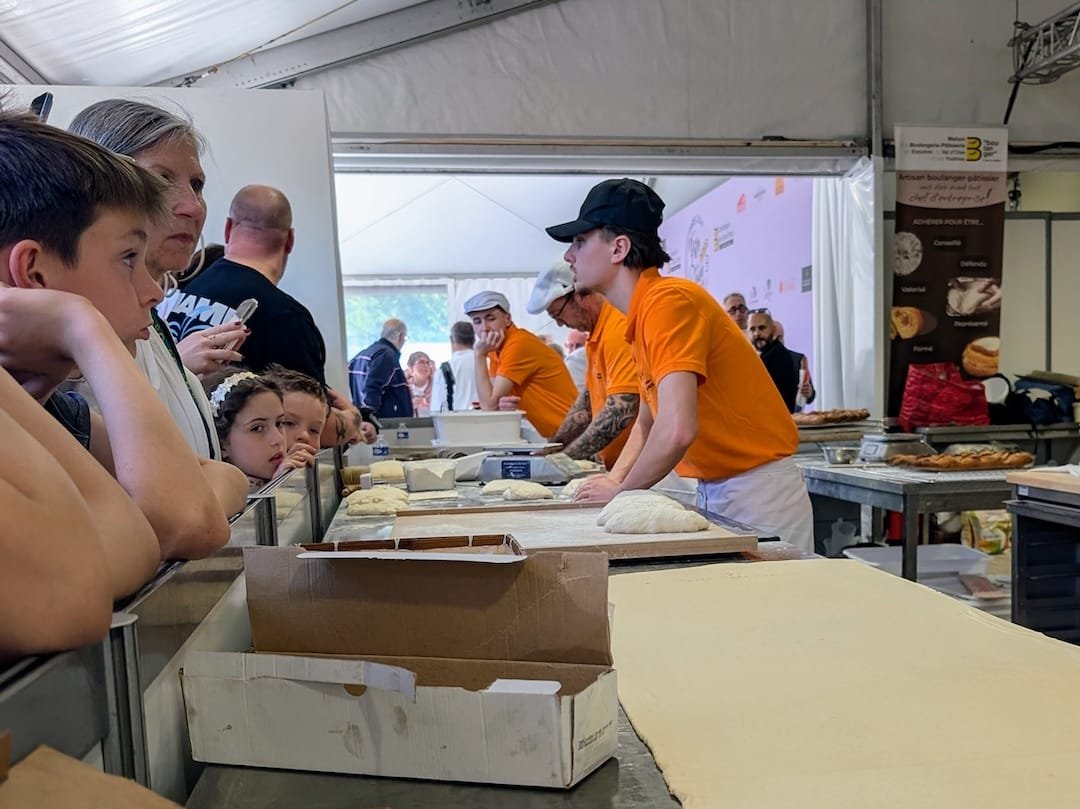
At the centre of the festival sits a giant temporary bakery installed directly in front of Notre-Dame Cathedral. Visitors can watch bread being mixed, shaped, fermented, scored, and baked throughout the day.
And honestly?
The smell alone is worth the trip.
Fresh butter caramelising in croissants. Toasted flour drifting through the spring air. Crackling crusts cooling on racks while tourists stand there visibly short-circuiting from happiness.
The festival is organised around Saint Honoré, the patron saint of bakers and pastry chefs, whose feast day falls in May.
Which explains why the event always takes place during the first half of May.
The timing is symbolic.
Winter is over.
Spring markets are exploding back to life.
Paris starts eating outdoors again.
And bread — the eternal backbone of French food culture — gets its moment in the spotlight.
Why France Celebrates Bakers in May: Saint Honoré & the Origins of Fête du Pain
Most visitors assume the Paris Bread Festival is a modern tourism event.
In reality?
The modern Fête du Pain may only date back to the mid-1990s, but the tradition of celebrating bakers in France during May stretches back centuries.
At the heart of it all sits:
Saint Honoré
The patron saint of bakers, pastry chefs, flour merchants, and millers.
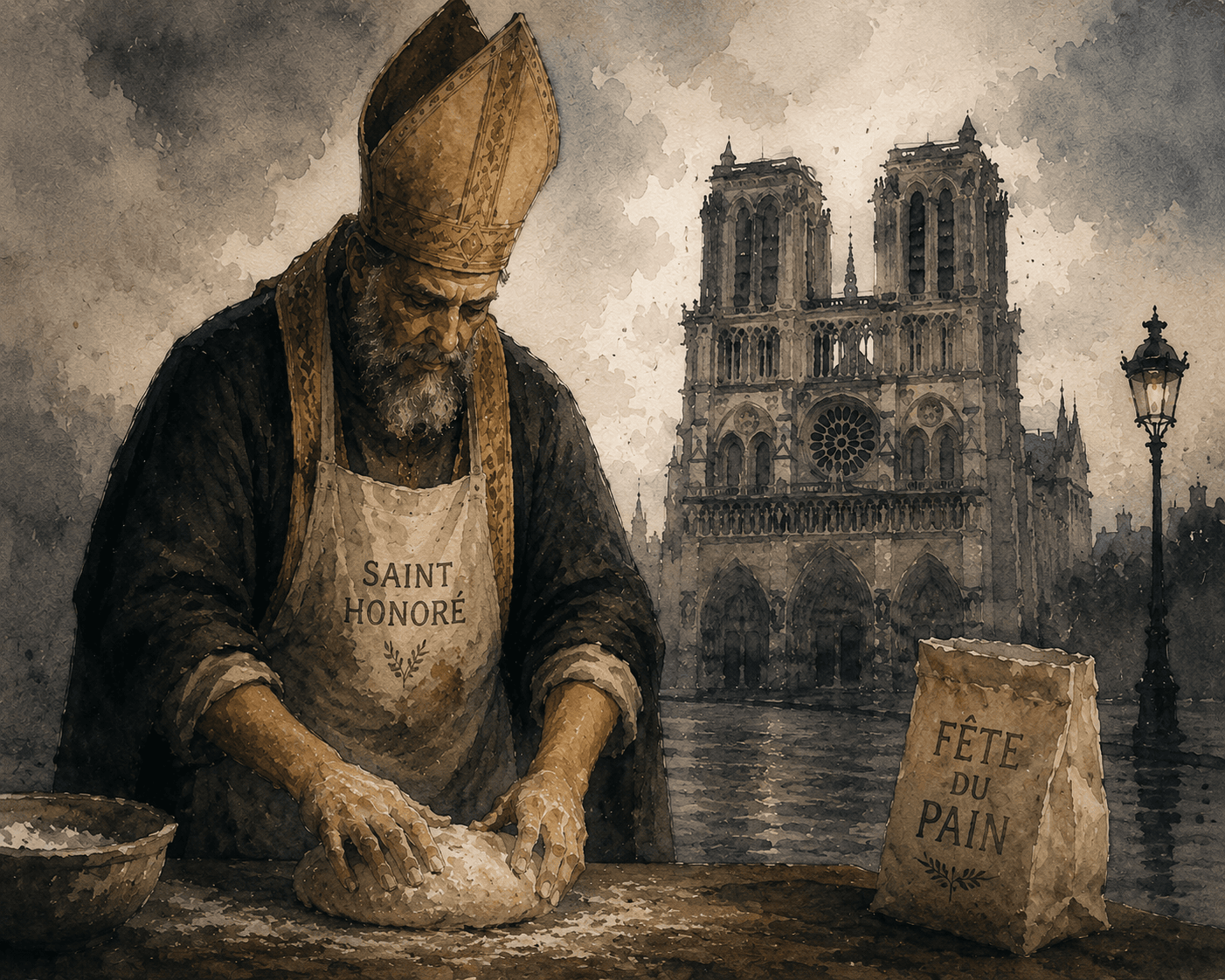
Honoré d’Amiens was a bishop from northern France believed to have lived during the 6th century. Over time, legends surrounding him became deeply tied to bread.
The most famous story is wonderfully strange and perfectly French.
When news spread that Honoré had been named bishop, his nursemaid reportedly refused to believe it. She declared she would only accept the miracle if the baker’s peel she was using suddenly came to life.
According to legend, the wooden bread peel rooted itself into the ground and transformed into a mulberry tree. (hotelcontinent.com)
That miracle helped cement Saint Honoré as the symbolic protector of bakers.
And in France, symbols matter.
Especially food symbols.
By the Middle Ages, Parisian bakers had fully embraced Saint Honoré as their patron saint. In around 1400, the bakers’ guild established itself around the Church of Saint-Honoré in Paris and formally celebrated his feast day every year on May 16th. (afrenchcollection.com)
The celebrations were not simply religious.
They were professional.
Public.
Communal.
A moment to recognise the importance of bakers to everyday French life.
And that spirit still survives today.
Long before influencers queued for croissants on TikTok, bakers in France were already gathering in May to celebrate craftsmanship, labour, bread, and community.
Even Louis XIV became involved. In 1659, he reportedly ordered bakers across France to observe Saint Honoré’s feast day and make charitable donations in the saint’s honour. (en.wikipedia.org)
The modern Fête du Pain was officially launched in 1996 at the initiative of Jean-Pierre Raffarin, then Minister for Small Businesses and Craft Trades. The idea was to create a national celebration showcasing artisan bakers, traditional bread-making, and bakery craftsmanship to the wider public. (boulangerie.org)
But despite the modern format — giant ovens on the Parvis de Notre-Dame, live demonstrations, public competitions, media coverage — the underlying spirit remains ancient.
The festival still revolves around Saint Honoré’s feast day.
And more importantly:
It still exists to publicly honour bakers.
That’s why the award ceremonies matter so much.
The Syndicat des Boulangers doesn’t quietly email winners afterwards.
The best bakers are celebrated publicly beneath Notre-Dame in front of fellow artisans, journalists, politicians, food obsessives, apprentices, locals, and the wider profession itself.
For a few days each May, bakers become the centre of the story.
And honestly?
In a world increasingly dominated by industrial food and anonymous production lines, there’s something deeply moving about that.
Why Bread Matters So Much in France
To understand the Paris Bread Festival, you need to understand something fundamental:
Bread in France is not a side dish.
It is infrastructure.
For centuries, bread has been tied to politics, class, labour, religion, and survival in France.
The French Revolution itself was fuelled partly by bread shortages and soaring flour prices. Bakers historically held enormous social importance because communities literally depended on them to survive.
Even today, bread remains woven into daily life in ways that surprise visitors.
French people still buy bread daily.
Children are sent to the bakery alone from a young age.
Restaurants automatically place bread on the table.
People judge neighbourhoods based on their boulangeries.
And unlike many countries where industrial bread dominates, France still protects traditional bread-making legally.
The famous baguette de tradition française must follow strict rules:
- No additives
- No frozen dough
- Long fermentation
- Made on-site
That’s why ordering “une tradition” in Paris often tastes radically different from the sad white sticks sold elsewhere around the world.
The Paris Bread Festival exists partly to defend and celebrate that craftsmanship.
Where Is the Paris Bread Festival?
The Paris Bread Festival takes place on:
Parvis Notre-Dame – Place Jean-Paul II
In the heart of the Île de la Cité.
Which is honestly one of the most dramatic food festival locations imaginable.
You’ve got:
- Notre-Dame towering behind the ovens
- Bells ringing across the square
- Tourists flooding past with selfie sticks
- School groups swarming the tasting stands
- Bakers quietly shaping dough beneath white tents
It feels gloriously French.
A little chaotic.
A little theatrical.
Very carb-heavy.
And somehow completely perfect.

When Is the Paris Bread Festival?
The festival normally takes place during the first half of May around Saint Honoré’s feast day.
Dates vary slightly each year.
Traditionally, the festival runs for around 7–10 days.
Typical Opening Hours
Around:
- 10:00 AM – 6:00 PM
Though demonstrations and ceremonies may vary.
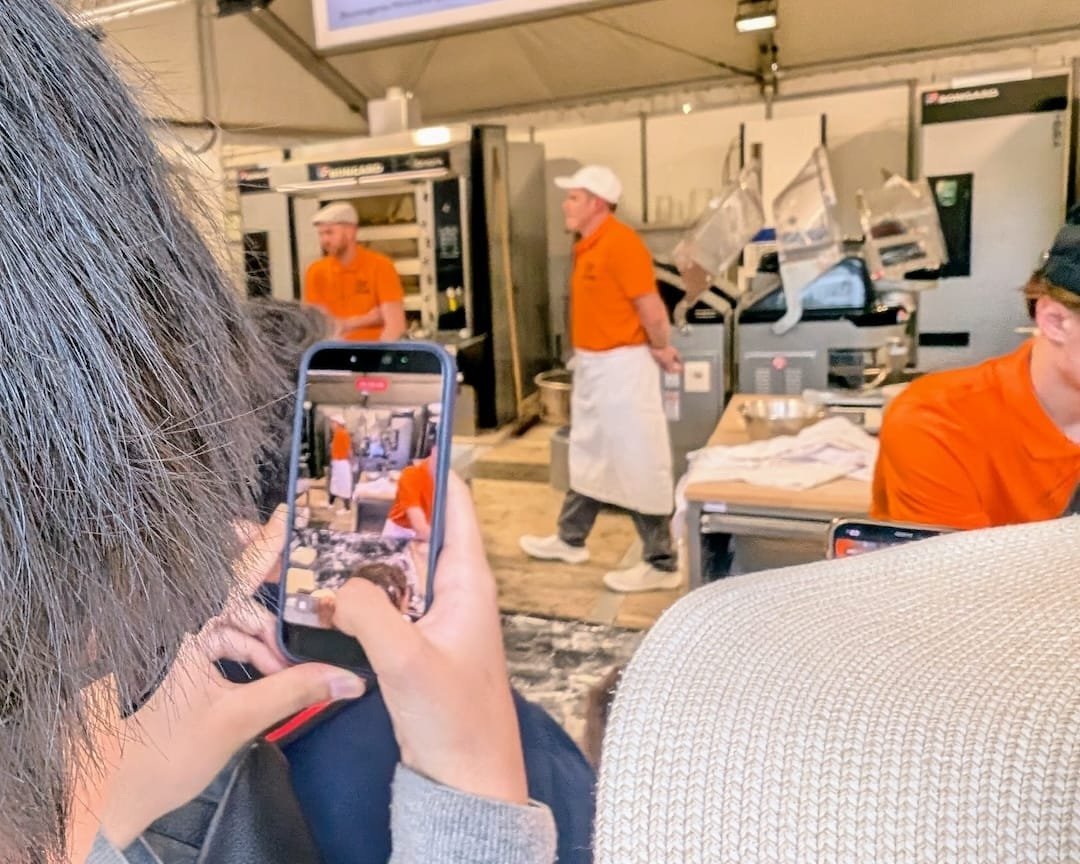
What Happens at the Festival?
What You’ll Actually See
This is where tourists often misunderstand the event.
They expect a food market.
But the Paris Bread Festival is closer to a giant live celebration of artisan baking culture.
You’ll usually find:
- Live baking demonstrations
- Croissant competitions
- Baguette competitions
- Educational workshops
- Apprentice bakers working publicly
- Flour and fermentation talks
- Baking equipment demonstrations
- Regional breads and pastries
- School activities for children
- Tastings and bakery stalls
One of the most fascinating things is simply watching bakers work.
Most of the time, bakers are hidden behind shop counters or buried in basement kitchens.
Here?
They become performers.
You suddenly realise how physical baking actually is.
The speed.
The muscle memory.
The precision.
The obsession.
And beneath all of it sits a very French tension:
Tradition versus modernity.
Hand shaping versus machinery.
Long fermentation versus productivity.
Artisan pride versus rising costs.
The festival quietly becomes a snapshot of French food culture itself.
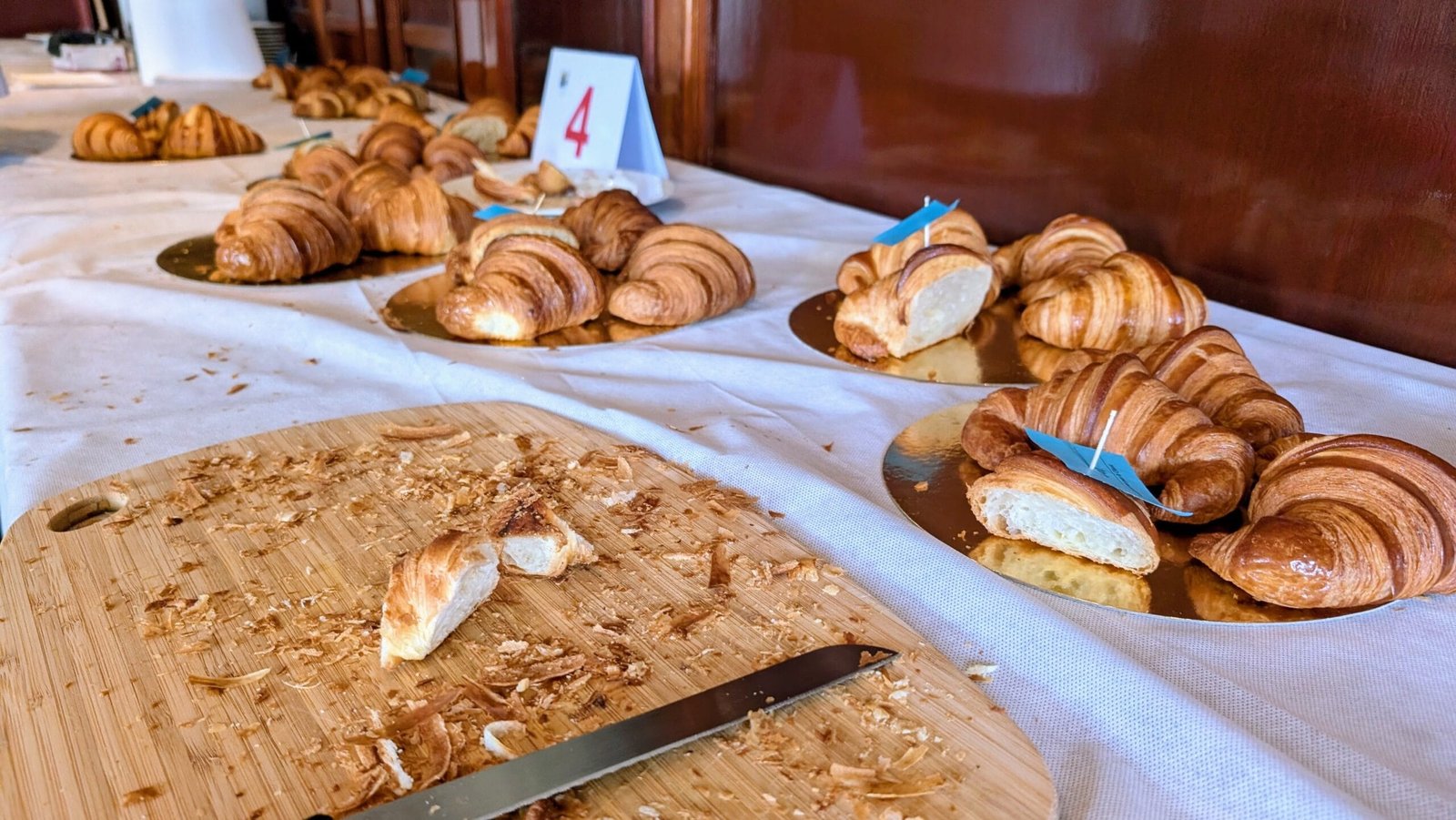
Inside the Best Croissant in Paris Competition
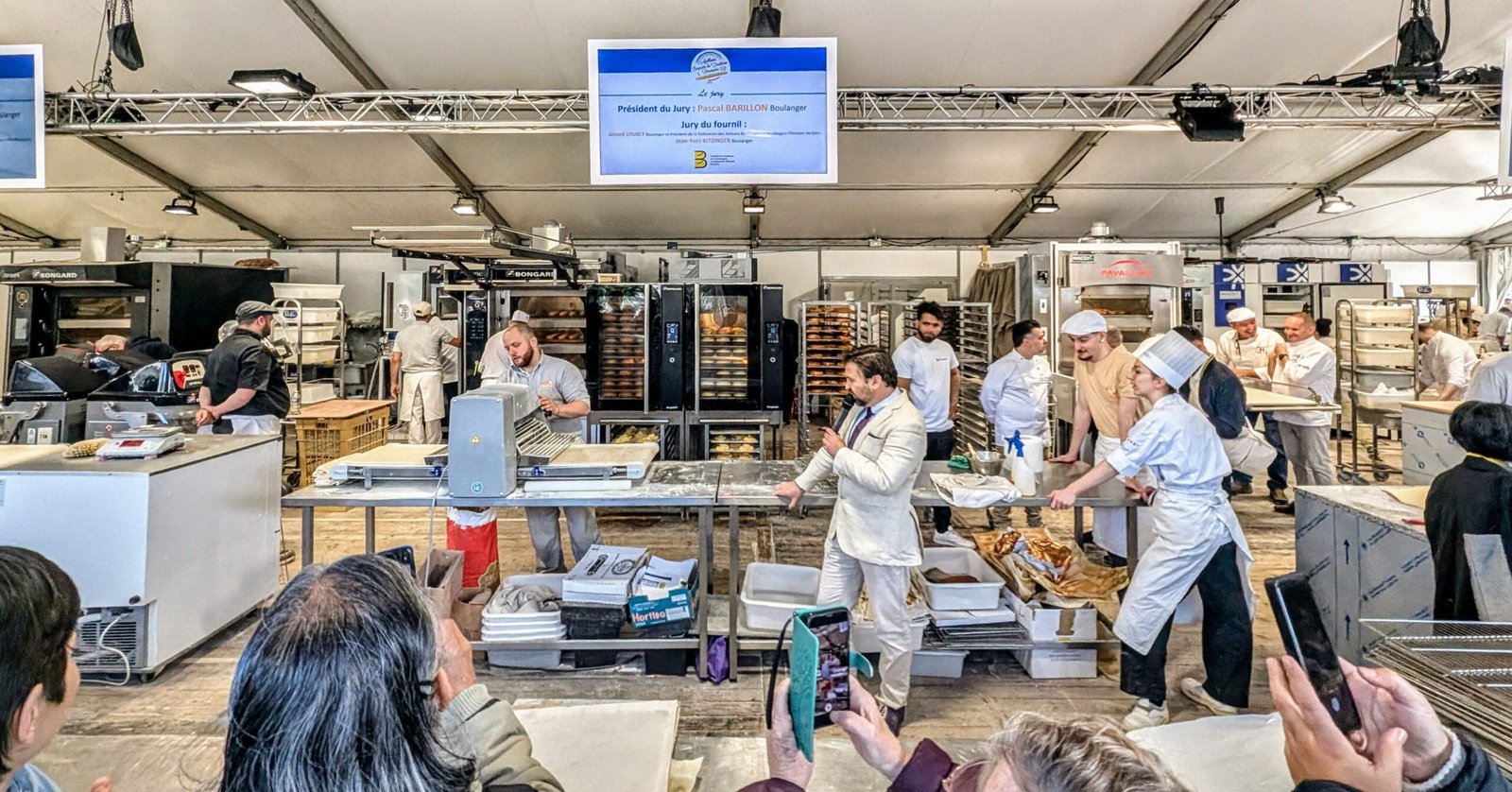
One thing that surprised me the first time I saw parts of the judging world up close was just how tense the atmosphere becomes backstage.
Warm trays arrive wrapped carefully in paper. Bakers try to read judges’ faces from across the room. Conversations suddenly drop into nervous silence as pastries are cut open and inspected.
And for a few minutes, years of training, sleep deprivation, technique, and pride sit balanced inside a laminated piece of butter and flour.
One of the biggest draws of the Paris Bread Festival is the announcement of Paris bakery competition winners.
Especially:
The Best Croissant in Paris
And yes — people in Paris take this extremely seriously.
I’ve had the privilege of seeing parts of this world from the inside through judging-related work with the Syndicat des Boulangers.
And trust me:
The judging process is far more technical than most tourists realise.
This isn’t just:
“Oh that tastes nice.”
Judges analyse:
- Lamination
- Honeycomb structure
- Butter integration
- Exterior crispness
- Interior texture
- Fermentation quality
- Symmetry
- Colouration
- Aroma
- Mouthfeel
- Balance of sweetness and salt
A great croissant should shatter delicately before melting almost instantly.
Too greasy?
Fail.
Too bready?
Fail.
Too pale?
Fail.
Poor honeycomb?
Fail.
Watching apprentices and bakers await results is genuinely emotional.
Because winning these competitions can transform a bakery’s future overnight.
Queues explode.
Media coverage arrives.
Parisians suddenly cross the city for your pastries.
French food culture still grants enormous prestige to technical mastery.
And nowhere is that more visible than here.
What Tourists Usually Get Wrong About the Paris Bread Festival
1. It’s not really a tourist festival
Tourists attend.
Absolutely.
But this event fundamentally exists for bakers.
It’s an industry celebration.
A professional gathering.
A cultural ritual.
That’s why some demonstrations still lean heavily French-language.
You’re stepping into a living food culture — not a polished tourism product.
And honestly?
That’s part of the magic.
Paris Food Tours
Eat Paris beyond the landmarks
Skip the tourist-trap theatre. Taste the markets, bakeries, bistros—no fluff. Just the food that actually matters.
Book a Paris Food Tour →2. The bread can seem expensive
Every year I hear tourists shocked by pastry prices.
But this is not supermarket bread.
You are paying for:
- artisan labour
- premium butter
- long fermentation
- craftsmanship
- and frankly… the privilege of eating fresh pastries beneath Notre-Dame.
Could you buy cheaper croissants elsewhere?
Sure.
Would they taste this good?
Probably not.
3. You don’t need all day
The festival is brilliant.
But realistically?
Most visitors spend:
- 45 minutes to 2 hours
Unless you’re a serious bread nerd.
Or a chef taking notes like me.
Is the Paris Bread Festival Worth Visiting?
Absolutely.
Especially if you care about:
- food culture
- craftsmanship
- French traditions
- baking
- markets
- sensory food experiences
- family-friendly Paris activities
This is one of the rare Paris food events that still feels genuinely connected to everyday French life.
There’s no velvet rope energy.
No influencer nonsense.
No fake luxury branding.
Just bakers.
Flour.
Butter.
Pride.
And in a city increasingly polished for tourism, that feels refreshing.
Is the Paris Bread Festival Good for Kids?
Honestly?
It’s one of the better family-friendly food events in Paris.
Kids usually love:
- watching dough being shaped
- giant ovens
- pastry tastings
- demonstrations
- the festival atmosphere
And French food festivals generally expect children to exist.
Which already puts Paris ahead of many cities.
Morning visits tend to work best for families.
Especially before the crowds build.
Tips for Visiting the Paris Bread Festival
Prepare for unpredictable Paris weather
May in Paris can swing wildly between glorious sunshine and sudden cold rain showers.
One year you’ll be eating warm croissants in a T-shirt beneath blue skies.
The next you’ll be hiding under the bakery tents clutching a coffee while the heavens collapse over Notre-Dame.
Bring layers.
Carry a small umbrella.
And if the weather looks good, go early — queues grow fast once the sun appears.
Go early
Around 10:00–11:00 AM is ideal.
The atmosphere is calmer.
The bread is fresher.
And you’ll actually be able to see demonstrations.
Don’t just queue for croissants
Many visitors immediately join the longest pastry queue.
Instead:
Wander first.
Watch.
Smell.
Observe the bakers.
The experience matters as much as the food.
Pair it with nearby food stops
You’re in central Paris.
Perfect nearby additions include:
- the Latin Quarter
- Île Saint-Louis
- Saint-Germain-des-Prés
- the flower market
- Left Bank cafés
This makes a brilliant slow Paris morning.
Bring cash just in case
Cards are usually accepted.
But French food events occasionally descend into technological chaos.
Always wise to carry a little cash.
Bread, Butter & Identity: Why This Festival Matters
The older I get, the more I realise the Paris Bread Festival is not really about eating.
It’s about witnessing.
Watching a country publicly celebrate craftsmanship.
Watching artisans treated with reverence.
Watching food remain tied to memory, labour, and identity.
Because for all the clichés tourists attach to France, one thing remains deeply true:
The French still believe food matters.
Not performatively.
Not ironically.
Not just for Instagram.
Genuinely.
And standing there beneath Notre-Dame while bakers pull golden croissants from the oven and schoolchildren stare wide-eyed at rising dough… you feel it.
That strange French ability to fold meaning into something as simple as flour, water, salt, and time.
Like butter into pastry.
Layer after layer.
Until it becomes culture itself.
Love this? Get more real, unfiltered food stories straight to your inbox. No fluff, no spam—just damn good food writing and all for free!

From the bustling streets of Paris to the heat of a professional kitchen, my life has always revolved around food. A Brit who moved to France at 16, I trained as a chef in a Parisian palace kitchen at 18 and have spent decades cooking, eating, and living like the French.
By day, I run kitchens and events, but Eat Like The French is my side hustle—a way to share my passion for French food through writing and food tours. After a detour into tech recruitment, I returned to what I love most: cooking and storytelling—one dish, one tour, and one bite at a time.
Paris Bread Festival FAQ
Is the Paris Bread Festival free?
Yes. Entry to the Paris Bread Festival is completely free.
You only pay for food, pastries, or speciality products you choose to buy.
Where does the Paris Bread Festival take place?
The festival takes place on the Parvis de Notre-Dame on the Île de la Cité in central Paris.
When is the Paris Bread Festival?
The festival usually takes place during the first half of May around Saint Honoré’s feast day.
Can you watch bakers making bread live?
Yes. One of the highlights is watching bakers shape, ferment, and bake bread live inside the temporary bakery installation.
Is the Paris Bread Festival worth it?
If you love food culture, baking, or authentic Paris experiences — absolutely.
It’s one of the best ways to witness French bread culture in action.
Link Opportunities
- Best Croissant in Paris 2025
- Inside the Judging Room: What It’s Really Like to Crown Paris Best Croissant
- What to Do in Paris for Foodies in May
- Paris Bread Festival 2025 Review
- Perfect Paris Picnic Guide
- Paris Food Tours
- Best Bakeries in Paris
2 thoughts on “Paris Bread Festival: The Ultimate Guide to Fête du Pain in Paris”